March 7th, 2010 by admin
Anti-tip brackets are metal devices designed to prevent freestanding ranges from tipping. They are normally attached to a rear leg of the range or screwed into the wall behind the range, and are included in all installation kits. A unit that is not equipped with these devices may tip over if enough weight is applied to its open door, such as that from a large Thanksgiving turkey, or even a small child. A falling range can crush, scald, or burn anyone caught beneath.
According to the U.S. Consumer Product Safety Commission (CPSC), there were 143 incidents caused by range tip-overs from 1980 to 2006. Of the 33 incidents that resulted in death, most of those victims were children. A small child may stand on an open range door in order to see what is cooking on the stovetop and accidentally cause the entire unit to fall on top of him, along with whatever hot items may have been cooking on the stovetop. The elderly, too, may be injured while using the range for support while cleaning.
In response to this danger, the American National Standards Institute (ANSI) and Underwriters Laboratories (UL) created standards in 1991 that require all ranges manufactured after that year to be capable of remaining stable while supporting 250 pounds of weight on their open doors. Manufacturers’ instructions, too, require that anti-tip brackets provided be installed. Despite these warnings, retailer Sears estimated in 1999 that a mere 5% of the gas and electric units they sold were ever equipped with anti-tip brackets. As a result of Sears’ failure to comply with safety regulations, they were sued and subsequently required to secure ranges in nearly 4 million homes, a measure that has been speculated to have cost Sears as much as $500 million.
In summary, ranges are susceptible to tipping if they are not equipped with anti-tip brackets. Inspectors should know how to confirm that these safety devices are present.
Source – NACHI.org
Posted in Consumer Awareness | No Comments »
October 9th, 2008 by admin
Frontline Property Inspections is happy to recommend 17 ways to save energy:
1. Get a free home energy audit from a Progress Energy to find ways to cut costs.
2. Check with your utility company for rebated whenever you install energy-saving equipment. Read the rest of this entry »
Posted in Consumer Awareness | No Comments »
October 9th, 2008 by admin
3 Deadly Mistakes that every home buyer should avoid…
Deadly Mistake #1: Thinking you can’t afford it.
Today, buying the home of your dreams is easier than ever before. Many people who thought that buying the home they wanted was simply out of their reach are now enjoying a new lifestyle in their very own new home. Read the rest of this entry »
Posted in Consumer Awareness | No Comments »
October 6th, 2008 by admin
Here are a few tips to keep your home safe from an electrical standpoint… Read the rest of this entry »
Posted in Electrical | No Comments »
October 6th, 2008 by admin
Electrical Appliances
Appliances need to be treated with respect and care. They need room to breathe. Avoid enclosing them in a cabinet without proper openings and do not store papers around them. Level appliances so they do not tip. Washers and dryers should be checked often. Read the rest of this entry »
Posted in Electrical | No Comments »
October 6th, 2008 by admin
Electrical Safety:
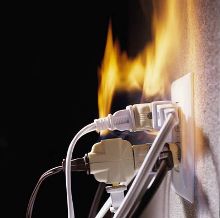
Electricity is an essential part of our lives. However, it has the potential to cause great harm. Electrical systems will function almost indefinitely if properly installed and not overloaded or physically abused. Electrical fires in our homes claim the lives of 485 Americans each year and injure 2,305 more. Read the rest of this entry »
Posted in Electrical | No Comments »
September 30th, 2008 by admin
Concrete and Tile
Concrete tiles are made of extruded concrete that is colored. Traditional roofing tiles are made from clay. Concrete and clay tile roofing systems are durable, aesthetically appealing, and low in maintenance. They also provide energy savings and are environmentally friendly. Read the rest of this entry »
Posted in Roof | No Comments »
September 30th, 2008 by admin
Several common roof types are used in Florida including these listed below… Read the rest of this entry »
Posted in Roof | No Comments »
September 30th, 2008 by admin
Roofing
Roofs play a key role in protecting building occupants and interiors from outside weather conditions, primarily moisture. The roof, insulation, and ventilation must all work together to keep the building free of moisture. Read the rest of this entry »
Posted in Roof | No Comments »
September 29th, 2008 by admin
Indoor Pools
When a pool is located completely within a house, the walls that surround the pool should be equipped to serve as pool safety barriers. Measures recommended above where a house wall serves as part of a safety barrier also apply for all the walls surrounding an indoor pool. Read the rest of this entry »
Posted in Pools | No Comments »